
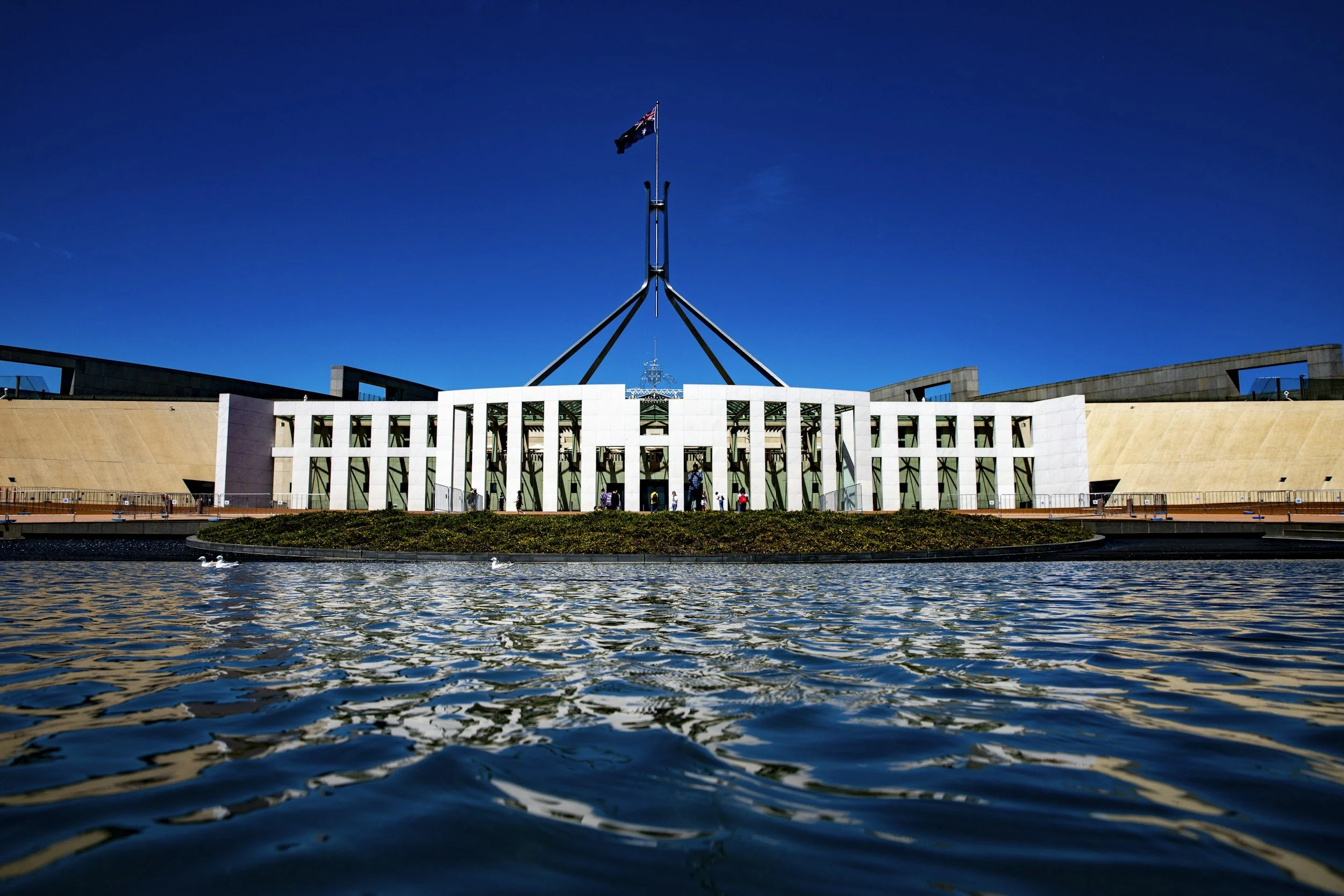
2026-27 Pre-budget Submission
On behalf of the residents and communities of the Lyne electorate, I have lodged my 2026–27 Pre-Budget Submission to highlight the funding priorities needed to support our region.
Lyne has the oldest population of any federal electorate and one of the lowest socio-economic profiles in the country. With a limited rate base, ageing infrastructure, and extensive road networks, our local councils face ongoing challenges delivering the services our communities rely on.
These pressures are intensified by seasonal tourism, which sees coastal communities double in size, and by the lasting impacts of the 2025 floods that devastated homes, businesses, farms, and critical infrastructure. Recovery is ongoing, and many residents are still waiting to return to normality.
This submission is a clear call for the Albanese Government to better target funding to regional and rural Australia and ensure communities like ours receive their fair share.
Lyne is a proud and resilient electorate. We are simply asking for the investment needed to keep our communities safe, connected, and supported.
Portfolio Funding Priorities
Health
Taree Urgent Care Clinic
Health is one of the major concerns on the mind of Lyne residents. I am very concerned about the level of access to health services across the Lyne electorate. It is clear that we need more investment by both the Federal and State Governments in local health services because, as it stands, the Lyne electorate sits squarely in the middle of a yawning service gap that exists between Coffs Harbour and Newcastle.
The Lyne electorate has the oldest demographic in the country. The obvious negative implications of having an elderly population on the electorate’s healthcare infrastructure is compounded by severe low socio-economic markers which exist throughout large swaths of the electorate, but particularly within the township of Taree and the wider Manning.
Indeed, in 2016, the SEIFA Index of Relative Socioeconomic Disadvantage score for the Mid-Coast LGA was 943, well below the Australian average of 1000.
In 2021, there were 108.9 General Medical Practitioners per 100,000 population. Again, this is well below the NSW average of 123.8.
Insufficient numbers of GPs, coupled with the socioeconomic fabric of the region means that an alarming and increasing number of people are either unable to source a GP or cannot afford to see one.
As a result, the area is experiencing sustained growth in emergency department (ED) demand. The Manning Base Hospital, the region’s only public hospital, is seeing a substantial volume of semi-urgent and non-urgent (triage 4 and 5) presentations that are appropriate for an urgent care pathway.
For instance, between 1 October 2024 and 30 September 2025, the Manning Base Hospital saw 12,429 triage 4 patients and 4,698 triage 5 patients. That’s 17,127 low-acuity presentations annually.
Redirecting suitable triage 4 and 5 presentations to an Urgent Care Clinic would:
• Relieve pressure on the ED.
• Free ED treatment spaces and clinician time for higher-acuity presentations.
• Reduce overall waiting times and the proportion of patients staying greater than 4 hours.
• Reduce ambulance offload delays by clearing ED capacity and reducing bottlenecks
• Improve patient experience with faster treatment for low-acuity problems in a UCC model (and less time in ED waiting rooms).
• Make better use of workforce - nurse practitioners/GP procedural skills can manage many T4/T5 problems at lower cost than ED care.
Redirecting even 30–50% of those annual presentations to an UCC would remove 5,000–8,500 presentations per year from the ED (13–23 per day on average), delivering noticeable improvements in ED capacity and wait times.
I note that the Urgent Care Clinic that was committed to Maitland will benefit many of my constituents and I am grateful to the government for this commitment. But Maitland is almost 2 hours away for many of my constituents. And whilst I acknowledge that, through the NSW Government and the determined lobbying of the Member for Myall Lakes, Tanya Thompson MP, a state-funded urgent care clinic has been funded (but yet to be delivered) in Forster, this is not enough to adequately serve the health needs of residents in Taree and the Manning Valley.
In addition, the growing population of the Great Lakes area also requires a dedicated public hospital service. There is strong community support for a new public hospital in Forster-Tuncurry. Funding responsibility for this sits with the NSW Government.
Recommendation: The Federal Government commit funding in the 2026/27 Budget to establish an Urgent Care Clinic in Taree as a priority project.
Maitland Health Stays
The Maitland Health Stays Project is an initiative of the Combined Rotary Clubs of Maitland. Built on the Rotary Lodge Model, the project is to build accommodation on an 8,000 square metre block at Turton Street in East Maitland. The property is only 750 metres from Maitland Public Hospital and within the Maitland health precinct.
Stage 1 includes a 20-guestroom facility, with scope for a future Stage 2 expansion to 36 rooms as demand growth warrants.
The accommodation will offer a “home away from home” for Isolated Patients Travel and Accommodation Assistance Scheme (IPTAAS) eligible patients receiving treatment in the Maitland Hospital with their family and carers.
While the physical location of the facility is outside of the Lyne electorate, Maitland Hospital provides health care services to Lyne residents who require overnight or much longer period stays in hospital.
In the 2023-2024 financial year, more than 2,200 admissions to Maitland Hospital were patients from regional NSW who lived more than 100 kilometres away as depicted in the accompanying chart. In addition, there were 7,600 patients who came from Cessnock, Singleton, Dungog, Lake Macquarie, and Central Coast LGAs, some of whom potentially could have benefited from economical accommodation being available, depending on their state of wellness, transport, and personal living situation.
In July 2025, thanks to the generosity of the Maitland business community, the land at Turton Street was secured at a cost of $2.5 million.
The estimated cost to build the Stage 1 20-guestroom facility is $6.7 million excluding GST with a further $0.5m for the fit out and $0.2m for other ancillary costs.
Recommendation: The Federal Government contribute at least 50% of the cost of Stage 1 of the project.
Aged Care
Aged Care support staff and nursing positions visa reform
Aged care is a significant concern in the electorate of Lyne given its demographics. One of the greatest challenges is staffing and the difficulty providers face attempting to source aged-care workers. Indeed, the future of many aged care facilities, with respect to staffing, workers and viability, is dire, due to a chronic shortage of both registered nurses and aged-care workers, exacerbated by the mandated care minute requirements.
Aged-care facilities in Lyne have advised me that to address the shortage, the vast majority of workers will inevitably have to be sourced from overseas. Concerningly, the waiting time for the processing of a 407 training visa has blown out from 2-3 months to 10 months and more, with 50 per cent of applications processed in 9 months but 90 per cent, processed in 11 months.
Recommendation: The Federal Government, in its upcoming Budget, invests the necessary funding and resources to ensure that the policies it has implemented in the aged care sector, including the mandated care minute targets and the requirement of having at least one registered nurse onsite, can actively be achieved by reducing the wait time for visa applicants for aged care support staff and nursing positions.
Support at Home places
The Lyne electorate, and indeed Australia, faces a critical, growing shortage of My Aged Care packages under the Support at Home Program for elderly residents, with demand vastly outstripping supply, leading to long wait times and significant strain on the aged care system. In an electorate like Lyne, with the oldest average population in the country, these delays are not just frustrating – they put lives, health, and independence at risk. I have been advised by some assessors that, for home-care packages, local aged care clients can be waiting months to have their assessments completed and once approved, they are waiting at least six months before being assigned the funding. From their initial contact with My Aged Care, clients in Lyne are commonly waiting 18 months before being able to access the Support at Home program. In addition to this, there is the issue of finding providers and health professionals whose books are not full. Under the Commonwealth Home Support Program in particular, constituents are voicing to me a complete absence of providers.
There is also concern that recent changes to the package assessment process has removed human decision making and replaced it with artificial intelligence. The result is that people are being recommended for lower-level packages with less support than the assessors would themselves recommend.
Recommendation: The Federal Government address the systemic issues in the Support at Home Program, including the poor provider coverage which is preventing elderly residents from accessing sufficient care, and commence delivery of 80,000 additional packages so that Lyne’s senior residents can start receiving the care they deserve. It should also review the use of AI in the assessment process.
Education
Childcare: Gloucester Preschool and Early Years Learning Centre
Gloucester Preschool and Early Years Learning Centre provides important and highly valued childcare services to Gloucester and the surrounding region. The Centre has 58 enrolled children and a waitlist stretching up to two years.
The Centre has taken the initiative to establish a new not-for-profit childcare centre in Barrington to ensure that it is working to meet local demand. The Centre has purchased a property in Barrington but requires additional funding to undertake the capital works needed to meet compliance standards.
The key challenge remains funding for the capital works needed to establish the centre.
Recommendation: Funding is provided from the Federal Government’s $1 billion Building Early Education Fund for this centre and others facing similar challenges.
Higher Education: Taree Universities Campus
The Taree Universities Campus is part of the Regional University Study Hubs initiative. It was established in 2020 as a community-led initiative to help students across the Manning and Great Lakes areas undertaker higher education without having to leave their community.
Flood Recovery Funding
In May 2025, the Taree Universities Campus was inundated with flood waters, with the lower levels of the building submerged, causing extensive internal and external damage, mud deposits, and rendering the campus’s elevator inoperable.
With a huge community effort, a temporary study space was opened on Level 2 of the building, pending continuing efforts to refit and reinstate Level 1.
However, despite these attempts to overcome the flood impact and get the Campus back to ‘normal’ operating conditions and capability, the number of students using the facility has fallen from some 400 per week down to some 80 per week because of the lack of facilities.
Because of its location, insurance against floods was not able to be acquired by TUC; the resources and funds of MidCoast Council are near exhausted and the community is dispirited and suffering from flood fatigue.
TUC requires one-off special funding of $100,000 to enable the refit and refurbishment.
Since TUC was established in 2020, the TUC facility has proven wonderfully effective in attracting and enabling local students to complete a course of tertiary study with Australian Uni’s in a purpose-built, safe and supported facility with high-speed internet, computers, printing, copying, video conferencing and study spaces. In the past 4 years, over 110 students have been celebrated for completing their studies at TUC.
Recommendation: The Federal Government provide a one-off payment of $100,000 to TUC to support its recovery from the May 2025 flood.
Commonwealth Support Places (CSPs)
The Taree Universities Campus was established in Cohort 2 of the Regional University Study Hub’s Program (RUSH).
There have been five cohorts of Study Hubs announced under the program. Those in Cohort 1 and 2 received Commonwealth Supported Places (CSPs) as the funding stream. Later streams received direct grant funding rather than CSPs.
TUC greatly values and supports the CSP model as a funding stream for two reasons. It provides a diversification of income streams; and second, flexibility in how funds can be applied to locally designed programs that support current and future students. Unlike tied grant funding, CSP-derived income is not restricted to specific deliverables, allowing TUC to respond directly to regional community and industry needs. CSPs also strengthen value proposition and deepen partnerships with universities.
In summary, CSPs are far more valuable than their direct monetary contribution alone. Specifically:
CSPs are leveraged by TUC and its university partners, particularly when combined with student contributions
Funds returned to TUC are untied, enabling locally relevant programs and student support models
CSPs function as TUC’s primary bargaining tool with universities and form the basis of partnerships
CSPs are the “language of universities”; having them allows TUC to engage as a credible partner
CSPs open doors to new partnerships, often delivering benefits well beyond the original allocation
CSPs underpin TUC’s independence and long-term financial sustainability
Importantly, under the current 2023–2027 Funding Agreement, the Department sets clear expectations that RUSHs will engage in widening participation activities and assist in addressing regional skills shortages. However, the agreement also specifies that departmental funding is limited to student support only, and that these broader activities must be funded from other sources. CSPs are, in practice, the key funding mechanism that enables TUC to meet these extended expectations.
TUC currently receives 32 CSPs per annum—a modest allocation by any measure. These CSPs are distributed proportionally across our university partners based on student numbers, the majority of whom are enrolled with Charles Sturt University. The distribution is shown in the table below.
By way of context, not all RUSHs receive CSPs. It is TUC’s understanding that only hubs funded under Cohorts 1 and 2 were allocated CSPs as part of their original funding agreements. This represents approximately 25 hubs within a national network that now totals around 56. Hubs funded under Cohort 3 and beyond did not receive CSPs. Any move to remove CSPs from existing hubs appears driven by a desire for uniformity and administrative convenience, rather than by consideration of the educational, economic, and community outcomes enabled by a more diverse funding model.
Recommendation: The Federal Government retain the CSP model as the funding stream for TUC.
TUC is also seeking additional CSPs to support growth in demand for its services and to build and expand its relation with another three universities partners.
Recommendation: The Federal Government provide TUC with an additional 10 CSPs.
Housing and Services Infrastructure
Headworks infrastructure
As is the case in much of the country, access to affordable housing is a significant issue for the electorate, exacerbated by a substantial supply shortfall. I have consulted with a range of parties involved in housing delivery and held a roundtable in Taree in 2025 to discuss new housing supply constraints and practical ways to overcome these challenges. This consultation has made clear that one of the major impediments to new housing projects is the lack of funding for critical enabling infrastructure, including water, power, sewerage, and access roads.
Multiple greenfield sites throughout the electorate have been identified by local council for development, but progress has been stalled due to a lack of funding for essential enabling infrastructure. A lack of funding to provide this headwork infrastructure is hindering the development of new housing and is stifling the Government’s ability to deliver upon it promises in the housing sector.
Recommendation: Whilst it is not the usual role of the Federal Government to fund enabling infrastructure, due consideration should be given to such a proposal. A significant financial commitment through a mixture of grants and concessional loans, made available to councils on a time-limited basis to fund enabling infrastructure would effectively unlock the supply of shovel-ready new housing developments. The funds could be offered on a ‘use it or lose it’ basis, so if there was no progress on successful projects within 12 months of contracting, the funding would be terminated. Such an investment would have a tremendous positive impact on local government and its ability to unlock housing, in line with the Government’s housing commitments.
Kiwarrak Off-River Water Storage (Formerly Peg Leg Storage Dam)
MidCoast Council runs the Manning Water Supply Scheme which provides water to around 80% of the MidCoast population. The scheme is supplied by two water sources – the Manning River and the Nabiac Inland Dune Aquifer.
Secure yield modelling has determined that a long-term water supply solution for the Manning scheme is required. This became more evident than ever when the Manning came within weeks of running out of water during the 2019 drought.
The proposed reservoir storage was first proposed in 1999 and land acquisition commenced in 2013.
The storage will be at least 5 GL in volume, which is the size that the storage needs to be to provide secure yield in 30 years’ time.
The Council has assessed the merit of the project, determining that it will:
· Enhance water supply security
· Improve drought and climate resilience
· Guarantee environmental flows for the Manning River
The total project cost is estimated at $202 million including:
· $3.8 million for the concept design, environmental assessment and community consultation
· $6.5 million for the detailed design
· $192 million for construction
To accelerate construction without significant increases to water bills, a significant funding subsidy is needed for the full project costs.
Recommendation: The Federal Government utilise existing funding in the National Water Grid Fund to support MidCoast Council to deliver the project.
Transport Infrastructure
Pacific Highway Grade-Separated Interchanges between Italia Road and Houston Mitchell Drive
The stretch of the Pacific Highway through the Lyne electorate includes some of the earliest upgrades of the Pacific Highway duplication project which began in the mid- 1990’s.
This early work in the project focused on the four-lane expansion of the highway, and completed with the urgency that comes with the Kempsey and Grafton bus crashes firmly in memory. Decisions were taken by governments at the time to focus on the duplication as expeditiously as possible, leaving grade-separated interchanges for a later date.
Despite multiple busy regional and local roads intersecting with the busiest stretch of the Pacific Highway north of Newcastle, only four grade-separated interchanges were constructed – Bulahdelah north, Forster north, Taree south, and at Cundletown.
The oversight of including additional grade-separated interchanges at other intersection points along the highway is now clear. Significant population growth and development has created a number of ‘pinch points’ at intersections with the highway including at:
· Italia Road
· Medowie Road
· Bucketts Way
· Myall Way
· Lakes Way
· Failford Road
· Coopernook/Harrington
· Houston Mitchell Drive
User ire is significant and road safety concerns are mounting. Despite significant pressure from local community groups with the support of both the former and current state and federal MPs, successive governments have failed to prioritise a program of work.
At this point in time, the only interchange which is funded for construction work is the Coopernook/Harrington interchange. However, this project has been sitting largely idle since two mounds were constructed on either side of the highway when the original duplication was completed in 2005. It has taken 21 years for the NSW State Government to undertake design work with it only recently beginning what is called “early road work”.
The only other mooted project that is funded was announced at the 2025 Federal election with both the Coalition and Labor committing $12 million for detailed planning and design work for upgrades at Medowie Road and Bucketts Way intersections. However, this project only commits to investigate options to address safety concerns, including grade-separated interchanges. Despite direct approaches to both the federal and state roads ministers, no timetable for this work has been forthcoming. This is unacceptable to residents and communities who must use these intersections daily.
The future of upgrades to grade-separated interchanges remains unclear despite ongoing and repeated lobbying for work and more importantly – a clear, demonstrable case from road users.
Houston Mitchell Drive is a primary example. Known locally at the ‘Ghost Road’, this intersection is considered high-risk, dangerous with a history of accidents and fatalities. The road leads to a significant residential growth corridor between Port Macquarie and Laurieton. Key safety issues include high-speed traffic, limited visibility due to the crest of a hill (south bound), and high traffic for heavy vehicles and caravans. Despite this, this intersection has not been prioritised for a grade-separated interchange. I share the concerns of the community here, and at the other remaining unfinished intersections, that it will take another fatality before either the state and federal governments act.
Recommendation: The Federal Government as part of the 2026/27 Budget, co-fund with the NSW State Government a dedicated grade-separated interchange and intersection safety program between Italia Road and Houston Mitchell Drive.
Local Government Road Funding
The state of road infrastructure is one of the most common and repeated issues raised with me across the Lyne electorate.
Lyne plays host to the Pacific Highway, a small number of state roads including the Oxley Highway and a section of the Lakes Way, regional roads such as the Bucketts Way, Lakes Way and the Thunderbolts Way and many thousands of kilometres of local sealed and unsealed roads.
There is great frustration about the road conditions and frequent misunderstandings about which tier of government has responsibility for to fix it. It is not unreasonable that this level of administrative detail is not top of mind for individuals who are simply reconciling the taxes and rates they pay with the state of the road network.
For example, the Bucketts Way and Lakes Way (majority of) are regional roads which fall within the remit of MidCoast but they are often perceived by the public as the funding responsibility of either the State or Federal Governments.
I am often lobbied regarding the state of the Oxley Highway – a road classified as a State Government responsibility.
Equally, I am often lobbied regarding speed mitigation measures or fixing potholes on local roads, which are again the remit of local councils.
The vast majority of the road network in Lyne falls with the responsibilities of the five local governments. Across all five council there is a common concern that available council revenue coupled with state and federal untied and tied grants is insufficient for the road renewal and maintenance task.
Dungog Shire Council is entirely responsible for the entire road network with no state designated roads within its boundaries. It says that with such a small rate base, the cost of roads is crippling Council’s ability to invest in its network and invest in other Council infrastructure responsibilities.
MidCoast Council which has the largest road network of any Council in NSW – over 3600 km – has undertaken a Roads Strategy to determine what is required to improve its road network condition and meet community expectations. It has found that the estimated annual funding shortfall transport infrastructure renewal is $26.35 million with a further $8.5 million of additional maintenance funding required each year to initiate further preventative programs.
If the situation is not rectified, the current backlog of road work will total $338 million within the next ten years.
In my ongoing discussions with Councils, the following points have been made:
· A preference for untied road grants that allow Councils to target expenditure to Council determined priorities
· The budgetary cycle of tied grant programs hinders road maintenance efficiencies.
· There is no dedicated funding program for local roads with both the Federal and State Government preferencing expenditure of regional roads.
· There is concern that the State government is cost shifting the responsibility for road infrastructure that supports state significant assets.
· That Blackspot funding should be refocused from reactive to historical accident statistics to a preventative road safety action program.
· Transparency by the NSW Grants Commission on why the distribution of block road funding per kilometre is skewed against small, rural councils.
· Review the indexation of block grants and Roads to Recovery Programs to consider using the road construction cost index, NSW rate peg or at least CPI each year.
Recommendation: The Federal Government increase road funding to local Councils for renewals and maintenance through mechanisms and programs that support Councils to efficiently improve road network conditions while maintaining recognition of funding sources.
Lorne Road Stages 2 & 3
Lorne Road is an important agricultural route between the Pacific Highway and the highly productive Comboyne Plateau, The road facilitates significant economic growth for the region and is regularly used by local dairy, beef and horticultural producers, tourists and heavy vehicles.
A large section of the road remains unsealed and challenging for the mix of traffic including tankers, trucks and other heavy vehicles.
An investment of $15 million is required for Stage 2 upgrade work on a section of the road and for design works to get Stage 3 shovel ready. Stage 1 of the Lorne Road upgrade was completed with a $5 million investment by the former Coalition Government matched by Port Macquarie Hastings Council.
Emergency Response
Flood Recovery May 2025 NSW East Coast severe weather event
In May 2025, the NSW East Coast severe weather event caused catastrophic flooding across the Lyne electorate. All five of the LGAs in the Lyne electorate were severely affected.
MidCoast Council experienced its highest ever flood levels, with Wingham reaching 15.69 metres and Taree recording a new peak of 6.45 metres.
Once the flood waters receded, damage assessments and property impacts were assessed. According to a MidCoast Council report:
· 6,000 properties were impacted by the flooding across the MidCoast
· 1,190 buildings were inundated
· 984 were deemed not habitable and 31 destroyed
· 106 public space assets were damaged with repair and replacement costs estimated to amount to $65.2 million
· 2,985 new road defects were identified, with a further 376 existing issues worsened
· 450 bridges affected with two bridges – Bight and Tiri – requiring full replacement at an estimated cost of $60 million
· 23 landslips, each estimated to cost $3-5 million to repair
· $6.5 million required to replace the water supply main to Wingham with a further $1.3 million in damage to water and sewerage infrastructure
· $273 million required for immediate transport infrastructure repairs
· $265 million required to prevent future disaster-related damage
The impact on businesses has been significant with a number closing for good, others struggled to operate to maintain cash flow while trying to repair their premises. In the worst hit area of Taree – Pulteney Street – shops are empty and the owners are unlikely to be able to lease the premises again.
A significant challenge for businesses has been insurance with most unable to pay the prohibitive premiums. Many businesses have argued that their insurance covers storm water but the insurers have refused to recognise the flood waters.
As noted in the MidCoast Council report, “the Insurance Council of Australia declared the event an insurance catastrophe, with over 6,000 claims lodged by late May 2025…Many uninsured commercial operators will receive no assistance, raising fears that parts of the Taree CBD could close permanently.”
The estimated cost of the event on the region’s primary producers is believed to be over $107 million (as of 23 June 2025). Over 3,000 animals were lost and not recovered and over 31,000 hectares of land – in the MidCoast alone – was impacted.
Following the declaration of the event as a natural disaster, the Commonwealth-NSW Government Disaster Recovery Funding Arrangements were triggered. Various packages to assist individuals, households, businesses and those on the land have been provided but the package has been insufficient for the scale and impact of the event.
In comparison to other significant disasters, businesses and primary producers have received insufficient capital to support recovery. It should also be noted that in December 2025, I was advised by the St Vincent de Paul charity in Taree that they were still supporting 400 families and I continue to meet people who are still not back in their homes.
Too often is the case that once the clean-up is completed, the support clears out as well. But to locals on the ground across the electorate, the wounds and impact of the event are still open and painful.
Recommendations:
1. Provide Cat D funding to small businesses and increase support to the region’s primary producers including the region’s beef, dairy and oyster farmers.
2. Primary Producer Flood mitigation program providing grants to primary producers for the construction of flood mounds and other measures.
3. Establish a Housing Fund to support house raising and relocation
4. Review of the Disaster Recovery Funding Arrangement Agreement between the Commonwealth and the NSW Government to ensure that it is fit for purpose and requires the NSW Government to provide support in line with other states and territories.
5. Fast track the Federal Government’s contribution to funding to MidCoast Council to support the rebuilding of the Bight and Tiri Bridges to betterment standard.
6. Beyond existing funding commitments under the DFRA, both the NSW State Government and Federal Government commit urgent funds to enable the region’s full recovery through:
a. A Taree CBD Revitalisation Program
b. A Community and Sporting Infrastructure Program to fund a wide range of critical projects including Wingham Pool and Wingham Reserve
c. A Tourism Industry Infrastructure and Recovery Support Program, and
d. A Regional Event Recovery Fund
Evacuation Centres Infrastructure Upgrades
Communities across the Lyne electorate have been smashed with undue regularity by floods and bushfires. From the most recent May 2025 flood to the floods and fires of 2021.
Communities have come together to support each other through these tragic and traumatic events. Places of refuge have been the community facilities that are the most familiar – Clubs, Halls and showgrounds.
Facilities across the electorate have been accredited as Emergency Evacuation Centres by the NSW Department of Communities and Justice. Accreditation however does not provide funding to ensure that these facilities can support large numbers of people and animals over days in emergencies.
The Pacific Palms Recreation Club (“The Recky”) is a central gathering point for the community in good times and in bad. Pacific Palms and neighbouring communities like Smith Lake, Blueys Beach and Elizabeth Beach are a one road in, one road out, surrounded by National Park, Wallis Lake and local beaches. The Club has received DCJ recognition but requires an upgrade to support its role in an emergency. This includes increasing the building’s footprint to create dedicated areas for emergency service operation, construction of an accessibility ramp, accessible entrance and disable parking and improving carpark drainage. The cost of this work is estimated at $1 million.
Club North Haven is seeking a $1 million contribution to support its $2 million upgrade to provide a secure and safe shelter and base of operations in a natural disaster. The Club was the go-to evacuation centre during the terrible floods of 2021. The proposed upgrade includes the creation of a multi-purpose, full-scale evacuation centre with improvements to the existing auditorium. This will create a new dedicated space for emergency services and evacuees. The upgrade includes the provision of audio-visual equipment and broadcasting facilities as well as other works including building undercover walkways from the car park to the club building and a breakout area for children.
Recommendation: The Federal Government’s Disaster Ready Fund prioritise applications for infrastructure upgrades of identified Emergency Evacuation Centres.
Community Infrastructure
Community Infrastructure is an all-encompassing term to identify physical places and spaces that support health and isolation, wellbeing and liveability. It includes, but is not limited to parks, sports fields, libraries, community centres and arts and cultural spaces.
Analysis by the Australian Sports Commission in 2018 has shown that community and sport infrastructure is vital across Australia because it drives over $16.2 billion in annual benefits, including $6.3 billion in economic activity, $4.9 billion in health savings, and $5.1 billion in social value.
Speaking with councils, community organisations and sporting clubs, participants and residents, it is clear that the upkeep, renewal and expansion of facilities is a high priority. There is however, frustration at the lack of certainty regarding both funding availability and an appreciation by governments of the real funding required to deliver high quality facilities.
Federal funding programs are ad hoc and provide limited funding. This makes programs extremely competitive. Community organisations and sporting clubs are frustrated that as volunteer organisations they have to be professional grant applicants. Many have raised concerns that “we keep applying and get nothing – not even feedback from departments as to why our applications are unsuccessful.”
I appreciate this feedback. Volunteerism is challenged by busy lives and often in regional communities, it is the same 3, 5 or 7 individuals running the administration across multiple organisations. As much as programs like Grant Finder, that I offer to my constituents, helps make searching for grant opportunities more efficient, the paperwork required for grants that are sporadic makes the task all the more burdensome for our community and sport volunteers.
Several Federal Government programs that have provided funding for regional and rural community organisations and sporting infrastructure such as the Building Better Regions Fund, the Local Roads and Community Infrastructure Fund, Stronger Communities Program and the Regional Precincts and Partnerships Program are no longer funded. These Programs provided significant investment in regional infrastructure across the Lyne electorate. While the NSW State Government does provide grant programs, it is insufficient to meet the needs of my electorate and Councils are simply unable to make up the gap.
Recommendation: The Federal Government reinstate long-term funding programs for regional and rural community and sporting infrastructure.
Below are a number of projects identified by the Lyne community requiring funding which could be supported by the reintroduction of specific community and sporting infrastructure programs.
Comboyne Ex-Servicemen’s & Citizens Club Facility Upgrade
An investment of $1.65 million will support the upgrading of the Club’s facilities including the construction of a disability access car park and ramp, a new roof which can accommodate solar panels, upgrades to bathrooms, improved air conditioning, installing a new children’s playground, upgrading the existing veranda, replacement of the electrical switchboard, and an upgrade to the bar area.
The Club is at the heart of it all as a gathering place for locals and visitors alike. However, despite being one of the fastest growing areas of the state, our hinterland is under-serviced in terms of community and family facilities. The project’s focus is on making the club more accessible to the wider community and making necessary improvements so it will be more environmentally sustainable.
Dungog Leash-Free Dog Park
An investment of $97,000 will support the construction of a dog leash-free area within the Dungog town centre, and include fencing and facilities such as dog bags and waste disposal.
Harrington to Crowdy Head Cyclepath
There is currently no dedicated cycle path between the connected coastal and popular holiday communities of Harrington and Crowdy Head.
Cyclists of all ages must share the 7.2km of narrow road with vehicles. Due to the road alignment, there are times of the day when cars are driving directly into the sun, making it difficult to see bikes.
The Rotary Club of Harrington held a Bike a Thon to raise awareness on 27 May 2024 and have started a petition. The project has long been discussed by Harrington locals and was highlighted as a local priority in Dr Gillespie’s Vision 2030 Plan Survey. It was noted as a long-term project requiring significant funding in the 2016 Greater Taree City Council Harrington/Crowdy Open Space Action Plan and again in MidCoast Council’s Open Space and Recreation Strategy 2023-2035.
An initial investment of $300,000 is required to undertake early construction planning and works. Further costings will be clarified with the completion of the business case study.
Kendall Showgrounds Upgrade
This project will invest in upgrading the Showground’s public toilets situated between the showground ring, horse stables and football field, with three additional showers and a disability accessible toilet and shower facility.
Kendall Showgrounds are a community owned asset in the heart of Kendall and very well used by a whole range of community and sporting groups, including the Pony Club, community markets, the local footy team, Men’s Shed, the Port Macquarie Escapees motorhome and caravan club, the annual National Disc Bowls Championship and the Camden Haven Show.
An investment of $100,000 is required to complete the project.
Stroud Heritage Walk
An investment of $50,000 is required to support the community to build a walking path to extend the Stroud Heritage Walk around the showground, down into Mill Creek and link back into town, creating a town loop.
Wauchope Safety Lighting
An investment of $15,000 is required to install security lighting in the vicinity of Wauchope Rotary Hall and the Anglican Church Op-Shop. The lack of lighting in the rear alcove of the Youth Hall has made it an easy target for vandals who graffiti the area and, disgracefully, raid the op-shop donation bins. Installing security lights at the front and rear of the building will deter anti-social behaviour, discourage loitering and provide volunteers greater confidence they won’t face a mess whenever they come to work in the op-shop. It also means people and community groups who use the church facilities at night won’t have to walk past a dark alcove when heading to or from their cars.
Sporting Infrastructure
The Lyne electorate hosts extensive indoor and outdoor sporting facilities following the long tradition of local sporting excellence and significant investment by community focused councils.
Participation in sport is part of the cultural history and social fabric of our communities.
For example, the MidCoast region hosts over 100,000 people and covers more than 10,000 square kilometres from coast to the Great Dividing Range. Within this area, MidCoast Council manages 4,134ha of open space, made up of 826 parks and reserves, 94 individual tennis courts, 34 netball courts, hockey fields, skate parks, and other outdoor sporting facilities.
There is also increasing demand for new facilities such as pump tracks, half-court basketball and pickleball courts across the electorate.
Councils across the region are confronting the realities of significant investment in sporting facilities some decades old, with many of these facilities fast approaching end of life usage or having already surpassed it.
With previous investment by State and Federal Governments, new facilities have been able to be constructed, such as Iron Arena in Taree. But the absence of ongoing State and Federal Government investment, not just for maintenance, but new construction, means many of these facilities remain subpar or unable to meet the needs of clubs, players and visitors.
The tennis courts at Wrigley Park in Taree, which once hosted regional events, are now significantly deteriorated and unable to host even local matches. Neither the Club nor the Council have sufficient funds to upgrade the facility which worsens over time.
Equally, the Manning Hockey Association has also raised concerns about the resurfacing of its second competition field which is compromising its ability to host state level matches.
While Clubs work hard fundraising, the six plus figure costs of renewal and rebuilding put the work out of reach without substantial grants.
The following projects include sporting infrastructure commitments made at the 2025 Federal Election.
Black Head New Multi-Purpose Court
An investment of $120,000 is required to assist the club construct a new multi-purpose court at the current tennis facility. The funding will help the club continue its plans to meet demand for its courts while also supporting the growth in pickleball and the training needs of other sports like netball and football.
Coopernook Pump Track
Coopernook is a small village approximately 23 kilometres north from the main regional centre of Taree. To travel to any other town requires travel along the Pacific Highway. There is no public transport and other than a local playground, there are no facilities for youth.
This project involves the construction of a new pump track at Coopernook Oval. This has been identified by MidCoast Council as a short-term priority.
An investment of $180,000 is required to support this project.
Dungog Tennis Clubhouse Upgrade
An investment of $78,000 will support the construction of improved kitchen facilities, storage, signage, internal fittings and a refurbishment of the club’s meeting space and was identified as a priority through Council’s development of its Open Spaces and Recreational Strategy 2023.
Football (Soccer) Fields
Football (soccer) is the number one club-based sport in Australia. There are over 1.1 million participants nationally, with 57% of participants in NSW.
Northern NSW Football has estimated that the economic contribution of the sport in Lyne is $6 million, not an insignificant sum for a regional area.
The growth of the sport across the region has cast light on a number of deficiencies in current infrastructure with the Lyne electorate. These include:
- Of available football changing facilities, very few are female-friendly or gender-neutral compliant
- 12% of fields have adequate or functional drainage in place
- 9% of fields have automatic irrigation; and
- 42% of the existing lighting meets minimum playing and safety standards (LUX).
As noted by Northern NSW Football, the standard of playing fields is hindering the community from fully engaging in the sport.
Key projects identified by Northern NSW Football that require investment include:
Gloucester Sports Lighting
An investment of $380,000 is required to support the upgrading of lighting at local netball and tennis facilities. Specifically, the funding will go towards replacing four existing light poles at the netball courts and installing eight light poles at the tennis courts and LED luminaries to 350 lux for competition standard play.
Half-Court Basketball Courts
An investment of $410,000 will support the delivery of half-court basketball courts in Forster, Taree, Wallabi Point, Stratford, North Arm Cove, Black Head, Pindimar, and Coopernook. Half-court basketball is a great outdoor sport that caters for smaller groups of players and is particularly suitable in smaller communities where space is limited.
Manning Valley Hockey Association – Allan Taylor Hockey Field surface replacement
An investment of $600,000 will support the Manning Valley Hockey Association to replace the surface of the Allan Taylor Hockey Field. The deterioration of the surface was accelerated during the 2025 May flood with the field sitting under floodwaters for a prolonged period. Post-flood degradation has affected surface integrity, drainage performance and overall safety.
It is has now reached the end of its lifespan. Resurfacing is required to ensure that it maintains its compliance with competition standard, supports participant safety and reduces injury risk.
The field is the primary venue for organised hockey in the region. It is relied upon by other sporting bodies, schools and community-based programs for training, development activities and events.
Old Bar Park Master Plan Improvements
Funding is required to enhance facilities at Old Bar Park including:
- An extension of the existing amenities building to include dedicated female facilities
- Building an additional multi-purpose court
- Installing lighting at the courts
- Upgrading the football field surface and drainage
- Building a new surf lifesaving tower and providing an upgrade to surf club beach access
The total cost of the project is $3 million.
Rainbow Beach Playing Fields Development
An investment of $350,000 is required for the installation of lighting at the existing multi-purpose court and delivery of three cricket nets on the grounds. These sports fields offer district level facilities for cricket, soccer and AFL as well as a multi-purpose court used by netballers, making them an incredibly valuable and well-used asset in the community. The netball and cricket clubs boast over 600 members between them, which proves these are strong, growing grassroots groups which deserve support.
The Lake Cathie Netball Club can’t train on the netball court during the season due to the lack of lighting at the court. Th three cricket nets will also give the Bonny Hills Lake Cathie Cricket Club the extra set-up they need to cater for their growing membership and competition schedule.
Tuncurry Sports Complex Improvements
The planned upgrade will involve several projects, including bringing the South Street Oval up to competition standard with LED lighting, building extra storage facilities, and upgrading the existing toilet building, long jump pit and discus cage. The project has been identified as part of the MidCoast Open Space and Recreation Strategy 2023-2035, and funding would be provided to MidCoast Council for delivery of the project in full collaboration with user groups.
The total funding requirement for this project is $1.5 million.
Wauchope Netball Courts Lighting
An investment of $300,000 will support the delivery of the Andrews Park lighting project with the installation of 6 poles and LED lighting over the netball courts at Andrews Park, This localised lighting package is a direct response to priorities raised with me by residents, particularly junior netballers. Funding for improved lighting is an investment in Wauchope’s long-term sporting infrastructure as well as the lifestyle and liveability of the area.
Wingham Tigers Rugby League All-Abilities Amenities Upgrade
An investment of $300,000 will support the construction of an all-abilities amenities block and associated infrastructure upgrade.
This investment will support the needs of the large contingent of supporter and visitors during training and game days.
Telecommunications
Mobile Blackspots Funding
At a time of ever-increasing reliance on telecommunications, people in the Lyne electorate are being left behind. The reliance on mobile phones is increasing, especially as landlines are being phased out or rendered useless due to inadequate maintenance.
Mobile blackspots within the Lyne electorate are a significant issue, causing safety risks, social isolation, and economic disadvantage. While mobile coverage is a must-have for everyday life, it can be especially critical and even life-threatening in emergencies.
For example, the Rural Fire Service (RFS) at Pindimar, a small coastal village in a highly forested area prone to bushfires, does not have mobile coverage at its base.
Elands, a village located in the Upper Manning Valley, is in a mobile blackspot area. The residents have had to rely on the landline services, which have deteriorated year on year. At one point, they lost landline service for over a month. In a particular emergency, they had to rely on a two-way radio to contact the Taree ambulance.
In other locations, there is insufficient mobile capacity to accommodate increases in holiday and seasonal populations. Resulting in business, at a critical high peak, being left with a completely unreliable internet and Eftpos. Not to mention people unable to make triple-zero emergency calls during these peak visitation periods.
Working with communities across the Lyne electorate, we have together identified at least 17 priority locations for a new mobile tower or an upgrade to existing towers including:
Bandwith/Capacity Increase
· Harrington
· Forster-Tuncurry
· Old Bar
· Wallabi Point
· Johns River
· Lorn
New Towers Required
· Bundabah-Pindimar
· Krambach & surrounds
· Bandon Grove & surrounds
· Gresford & surrounds
· Allworth & surrounds
· Mooral Creek & surrounds
· Limeburners Creek & surrounds
· Marlee & Surrounds
· Monkerai & surrounds
· Stroud & surrounds
· Moorland
There are additional blackspots on the Pacific Highway, particularly between Coopernook and Kew that also require attention.
Recommendation: The Federal Government increase funding in the Mobile Blackspots Program and ensure that the guidelines prioritise expenditure in rural and regional Australia.
Local Government
Reform of funding to local government.
The Lyne electorate, 16,000 square kilometres in size, has a massive road network, which is becoming increasingly aged and in a state of neglect and disrepair. For most of the councils within the electorate, maintenance of council roads and infrastructure is beyond their means because, like other rural and regional local governments, they have a smaller rate base and a reduced capacity to raise revenue.
These councils are raising the issue of the Local Government Financial Assistance Grants. As you are aware, Financial Assistance Grants are paid to councils annually by the Federal Government, with local government grant commissions in each state recommending the distribution of funding. The methodology used to distribute these critical funds is seriously flawed. In addition, the funding has gone backwards due to an indexation freeze 10 years ago.
It has become clear that the Financial Assistance Grants are no longer fit for purpose. They no longer serve the interests of regional councils. This requires immediate attention to help all rural and regional councils alike - who are already struggling to meet an unprecedented burden of increased costs and cost shifting, to obtain the funding their roads and infrastructure need. I understand from my conversations with local government, Dungog Shire Council in particular, that the revenue generated by some city councils from their parking metres alone is greater than the entire budget of Dungog Shire Council. And yet, in many cases, it is these councils that are receiving four to five times more funding per kilometre of road than their regional counterparts.
As a former member of the House Standing Committee on Regional Development, Infrastructure and Transport, I acknowledge that the Minister for Emergency Management; Minister for Regional Development, Local Government and Territories, the Hon Kristy McBain MP, has referred an inquiry into local government funding to the committee. I consequently request that the Government recognise the many submissions received, primarily from regional councils, and address the reality that the current grant system is no longer fit for purpose and needs to be overhauled. A review of methodologies used to distribute Financial Assistance Grant funding with the aim of reducing the population (per capita) factor in the general-purpose grant allocation from 30% to 10%; and ensuring greater equity is delivered to regional and rural councils in the distribution of the roads component resulting in an equal per kilometre rate across all councils is strongly recommended.
Stakeholder Priority Projects
In preparing this pre-budget submission, I invited progress associations and community groups to identify local priority projects for funding. Projects listed below reflect local community work and may not yet align to their respective local council and NSW State Government project and funding priorities and plans. Projects listed may require DA approval and further planning and engineering analysis.
Bonny Hills Progress Association
The Bonny Hills Progress Association is a voluntary community organisation established to progress the vision of the Bonny Hills village and community.
Bonny Hills is a community within the Port Macquarie Hastings Local Government Area.
The Association is seeking funding to support community infrastructure upgrades including:
· Upgrade to parking at Hall Reserve
The current state of the edges of the road into the hall car park are eroded and washed out and in need of urgent repair. The existing car retaining walls are rotting and decomposing and in urgent need or replacement.
The cost of this work is estimated at $300,000.
· Signed pathway - Rainbow Beach to Head of Grants Head Track at Honeysuckle Road
The current walking tracks are either grass or rough gravel which become impassable during wet weather. The path would connect to existing work already completed on the Grants Head Track in 2021.
The cost of this work is estimated at $800,000.
· Develop viewing, picnic and parking area and complete the mural at the Water Tower on Skyline Place
This location boasts one of the best ocean views, from Tacking Point in the North to Point Perpendicular in the South, in the region. At the moment, the car park is washed out and has no lighting at night.
The Association has yet to seek formal costing of this work but anticipates it to amount to at least $1,5000,000.
· Telescope/direction plaque at Ocean Drive viewing platform
The Association has undertaken significant investigative work on this project and believes it would enhance the recently completed upgrades made possible by a prior Commonwealth Government grant.
The cost of this work is estimated at $15,000 with additional labour and costs to be provided in-kind by the Association.
· Viewing platform and walking track to Grants Head on Ocean Drive at the southern edge of Bonny Hills.
This is a great location to view the spectacular Grant Headland and Sharkys Beach. A walking/cycling track to the north and east would connect to the nearby water tower, while a track to the south and east would connect to the existing North Haven Walking Track and Grants Head Walking Track at Sharkys Beach.
The Association has estimated the cost of this work at $1,000.000.
Clarence Town Progress Association
The Clarence Town Progress Association is a volunteer led organisation that has been working for over 20 years with the community and governments to improve community assets across Clarence Town. Clarence Town has a population of approximately 1700 and is the fastest growing town in the Dungog Shire.
The Association is seeking funding for the expansion of footpaths in the village centre and connections to the surrounding estates within 15 minutes walking distance from shops and schools.
There is a patchwork of footpaths with many disconnects but the most glaring omission is the lack of any footpaths in the main street, Grey Street. This is the commercial centre with businesses stretched some 700 metres and minimal formed paths outside individual shops. The consequences are pedestrians have little option but to walk in the road. A young mother wheeling a pram and a walking youngster at hand has no alternative but to walk outside parked cars in the traffic lane.
The estimated distance of paths required to bring the town to minimal State Government safety and connectivity standards is 2000m. Dungog Shire Council advise current costs for a 2.5 metre wide shared path at $450 per lineal metre.
Allowing for inflation and ancillary works, drainage, and vegetation removal, the Associaton estimates the cost of the work at $980,000.
Coomba & District Progress Association
· Second All-Weather Access Road to Coomba Park
Coomba Park is accessible only via a single 20+ km road of low to average condition, situated along the lake edge and bordered by Wallingat National Park. In the event of flooding or bushfire, the village becomes isolated, with no alternative route and limited safe evacuation options. The Association is seeking funding for a feasibility study to examine a second all-weather access road to Coomba Park to ensure safe and reliable connectivity during emergencies.
· Coomba Park Boat Ramp Upgrade
The existing boat ramp and public wharf at Coomba Park are inadequate and unsafe. The ramp is slippery, with algae and oyster-covered rocks, and lacks a nearby tie-up point, creating hazards for users. MidCoast Council acknowledges the need for upgrades, but costs dramatically exceed their marine infrastructure budget. Enhancing this facility would support tourism and recreational activities, benefiting the local economy. The Association is seeking funding for a major upgrade of the Coomba Park boat ramp and associated infrastructure to improve safety and promote tourism.
· Coomba Park Road Upgrade
Coomba Park Road is an example of the poor state of most of our regional roads, it requires immediate attention, including reinforcing soft edges, resurfacing the deteriorated sections, widening to allow for minimum width for the passing vehicles and trucks, and ensuring the entire length of the road has line markings to ensure safe travel. The Association is seeing funding for MidCoast Council to undertake comprehensive road maintenance and safety improvements across the electorate.
Karuah Progress Association Incorporated
· Public Transport Improvements
The public transport system in Karuah is limited which makes it difficult for non drivers and the elderly to get to medical and other appointments. Karuah has a large retiree community who are disadvantaged by the lack of suitable transport.
· Expansion of community transport services
· Pedestrian safety and active transport linkages
· Limited public transport to hospitals and essential services
· Karuah River and Foreshore Upgrades
Environmental and flood mitigation works are required along the Karuah River foreshore to protect community assets, enhance amenity, and support local tourism and cultural interpretation.
· Riverbank stabilisation and revegetation;
· Flood mitigation and drainage upgrades;
· Upgrade to amenities
· Cultural signage and walking track linking to Aboriginal heritage sites.
· Improvements to Local Paths, Guttering and Roadways
Karuah’s streets and drainage are struggling to keep up with community needs. Many roads are worn and uneven, with poor guttering that causes water to pool and damage surfaces after rain. In several areas there are no proper footpaths, making it unsafe and difficult for people—especially children and older residents—to walk between homes, the school, and local shops.
These long-standing issues affect safety, accessibility, and the town’s appeal to visitors. Targeted investment in road repairs, kerb and guttering, and a connected path network would greatly improve daily life and support local growth.
· Karuah River, Longworth Park and Foreshore Upgrades
Environmental and flood mitigation works are required along the Karuah River foreshore to protect community assets, enhance amenity, and support local tourism and cultural interpretation.
· Riverbank stabilisation and revegetation;
· Flood mitigation and drainage upgrades;
· Upgrade to amenities
· Cultural signage and walking track linking to Aboriginal heritage sites.
· Youth unemployment,
· Flood and fire vulnerability
· Town centre revitalisation (streetscape, footpaths, signage, lighting, and accessibility);
· Water, sewer, and stormwater network improvements
· Upgrade the sewer treatment system
· Establishment of an Employment and Skills Development Hub
Karuah is a growing regional community strategically located along the Pacific Highway corridor in the Port Stephens region of New South Wales. With a mixed demographic, including a strong Aboriginal community presence (Karuah Local Aboriginal Land Council), a growing tourism economy, and proximity to key transport links, the town is positioned to contribute meaningfully to the region’s economic and social wellbeing.
The Association is seeking funding to establish a small-scale regional employment and skills hub in Karuah focused on construction, hospitality, and land management.
· Partnership with TAFE NSW, local employers, and the LALC;
· Integration with Job Skills Australia and Indigenous employment pathways.
Council Funding Priorities
Dungog Shire Council
Dungog Shire is located inland, in the Upper Hunter area of the Lyne electorate. It has a population of approximately 10,000 people. Agriculture, construction, and education and training are the main industries of employment with nearly 60% of Dungog’s working population traveling outside the LGA to work.
Funding priorities include:
· $76 million for urgent upgrades and reconstruction to the sealed road network
The Council has undertaken a comprehensive condition assessment and identified that more than 62 kilometres of the Council’s sealed road network across urban, rural and regional roads require either rehabilitation or reconstruction.
· $5 million a year over 10 years for essential upgrades and maintenance for unsealed roads
A large proportion of the Council road network is unsealed and its condition is deteriorating. Without a structured investment plan with federal and state government injection, these roads will continue to degrade, leading to greater safety risks and more expensive future repairs.
The funding will allow grading and re-sheeting to improve surface quality and durability, drainage and culvert upgrades to prevent erosion and washouts, and increased resourcing to ensure proactive rather than reactive maintenance.
· $12 million for capital investment in community projects
This investment is required to support a range of community infrastructure projects, including:
- Upgrading parks, playgrounds, and sporting facilities to enhance liveability and encourage active lifestyles
- Investing in pools to strengthen local connections and support events
- Improving town centres and public amenities to create more attractive, accessible and welcoming spaces for residents and visitors
· $1 million over 5 years to strengthen local disaster response & resilience
Over the past four years, Dungog Shire has experienced six declared natural disasters.
A $1 million investment over five years is required to ensure Dungog Shire Council can:
- Fund dedicated emergency management personnel to coordinate response and recovery efforts effectively
- Enhance disaster preparedness and risk mitigation strategies to reduce long-term damage and financial impact
- Strengthen Council’s ability to respond to emergencies with appropriate resourcing, training and equipment; and
- Support community resilience initiatives to better prepare residents and businesses for future disasters
Maitland City Council
The Lyne electorate takes in the northern suburbs of Maitland within the Council boundaries. These include the suburbs of Lorn, Largs, Bolwarra, Hinton, Mindaribba and Maitland Vale.
Maitland is one of the fastest growing cities in Australia with an annual growth rate consistently above 2.5%.
Ernie Jurd Oval
Ernie Jurd Oval is situated in Largs. The current sports fields are used for cricket and football (soccer). The project is to design and construct a new amenity building as the current facilities and amenities are in poor condition and do not meet the requirements or needs of its users.
The Council is seeking a contribution of $2 million to match its co-contribution of $2 million to complete this $4 million project.
Disaster Resilience: Central Maitland and Lorn Suburbs
Central Maitland (which sits just over the border in the Paterson electorate) is surrounded by high-hazard floodways. Higher ground in Central Maitland provides refuge for a one per cent Annual Exceedance Probability (AEP) flood, but this area diminishes in larger floods.
The current primary evacuation route – the Long Bridge is overtopped in a five per cent AEP flood or similar and, is unlikely to remain serviceable during extreme flood events. Further, structural concerns over the Long Bridge also underscores the urgent need for a safer, flood-immune alternative route for the city.
Without a high-level flood evacuation route, further residential development in Central Maitland will compound existing vulnerabilities and undermine emergency response capabilities. Securing this route is a pre-requisite for sustainable urban growth and effective flood plain management.
The Council is seeking $2.75 million for planning and delivery of a high-level, flood evacuation route for Central Maitland and Lorn.
Outside of the Council’s current Partnerships and Advocacy Strategy, the Council has also identified two additional projects for funding within the Lyne electorate.
· Lorn Oval grandstand and clubroom improvements, estimated to cost $1 million
· Largs to Bolwarra footpath, estimated to cost $600,000
MidCoast Council
MidCoast Council is the largest council area and wholly situated within the Lyne electorate. It covers 195 towns, villages and localities over 10,000 square kilometres.
The population is approximately 100,000 people with the two main population centres of Taree and Forster-Tuncurry and rural coastal centres of Tea Gardens-Hawks Nest, Gloucester, Stroud, Wingham, Hallidays Point, Old Bar and Harrington.
It is a regional service centre.
The following projects have been identified and prioritised by Council. Council has indicated that these projects are shovel ready.
Transport, Access and Public Infrastructure Projects
Various locations
Rural Collector Roads
Road widening, alignment improvements, pavement strengthening, shoulder treatments, resealing and line marking on key transport routes.
Funding estimate: $15 million
Urban and village areas across MidCoast
Priority Pedestrian Access and Mobility Plan projects
Improving safe, accessible and connected routes for pedestrians, cyclists and people with mobility impairments. An example includes upgrading the pedestrian footpath on The Singing Bridge linking Tea Gardens and Hawks Nest.
Funding estimate: $5.8 million
Urban centres
Accessibility parking upgrades
Council assessments show up to 95 per cent of public accessible parking spaces do not meet current standards. This project addresses the majority of non-compliant spaces.
Funding estimate: $1.152 million
Community, Recreation and Open Space Projects
Taree
Taree Recreation Grounds
A 50-hectare sporting precinct supporting a wide range of clubs. Stage 1a includes drainage, irrigation, lighting, surface improvements, accessible pathways and renewal of the netball clubhouse.
Funding estimate: $7.5 millionTaree Regional Skate Park
Construction of a new regional-level skate park to replace the existing facility near John Martin Oval, which is in poor condition.
Funding estimate: $1.5 million
Forster
Pelican Boardwalk extension to Little Street
Completion of the foreshore boardwalk, with design work already finalised.
Funding estimate: $1.8 millionForster Main Beach Master Plan staged implementation
Construction of a new café and amenities building and creation of a new community green space.
Funding estimate: $1.7 million
Wingham
Wingham Central Park play space upgrade
Upgrade of the existing play space to a district-level facility.
Funding estimate: $900,000Wingham Sports Complex
Replacement of soccer and touch football amenities and kiosk, including female-friendly facilities.
Funding estimate: $1 million
Harrington
Harrington Skate Park
Construction of a new district-level skate park.
Funding estimate: $800,000
Tea Gardens and Hawks Nest
Hawks Nest Skate Park
Construction of a new district-level skate park.
Funding estimate: $800,000
Tuncurry
Tuncurry Rockpool amenities upgrade
Construction of a new centrally located amenities building to service café patrons, rock pool users and the children’s playground.
Funding estimate: $750,000
Diamond Beach
Diamond Beach Park upgrade
New play space, equipment storage, basketball backboard and resurfacing of the basketball and pickleball court.
Funding estimate: $400,000Diamond Beach Sports Ground upgrade
Installation of new floodlighting to support increased training and competition opportunities.
Funding estimate: $400,000
Port Macquarie-Hastings Council
The Port Macquarie-Hastings Council is an LGA on the mid-north coast of NSW that partially sits within the Lyne electorate. The Council area in Lyne includes the townships of Wauchope, Beechwood, Lake Cathie, Bonny Hills, Laurieton, Kew, Kendall, and Comboyne.
The following projects have been identified and prioritised by Council.
Kew
Schools to Schools Shared Pathway (Kew to Kendall)
Estimated cost: $3–5 millionSchools to Schools Shared Pathway (Kew to Laurieton)
Estimated cost: $3–5 million
Wauchope CBD
Wauchope CBD Drainage Upgrade
Estimated cost: $10–15 million
Lake Cathie
Ocean Drive Corridor Upgrades (Projects 15 and 16)
Estimated cost: $25 million per project
Laurieton
Kew Road/Ocean Drive and Bold Street/Ocean Drive intersection upgrades
Estimated cost: $5–6 million
Comboyne
Orara Street, Comboyne Street and Graham Street intersection upgrade
Estimated cost: $2.5–3 million
Beechwood
Beechwood Road Upgrade Stage 6, including Steels Bridge replacement
Estimated cost: $22 millionWoodlands Bridge upgrade
Estimated cost: $2.5 millionStoney Creek Road upgrade
Estimated cost: To be confirmed
Utilities
Cowarra Water Supply Scheme
Estimated cost: $165 millionKew–Kendall Wastewater Scheme diversion
Estimated cost: $39.2 million
Community and Sporting Infrastructure
Rainbow Beach
Rainbow Beach Sporting Fields
Estimated cost: $17.4 million
Wauchope
Hastings Regional Sporting Complex
Estimated cost: $73 millionWauchope Indoor Stadium amenity refurbishment
Estimated cost: $260,000Charlie Watt Reserve amenity building refurbishment
Estimated cost: $150,000Fairmont Gardens sporting amenity building replacement and field drainage
Estimated cost: $700,000Ellenborough Reserve amenity refurbishment
Estimated cost: $150,000Andrews Park sporting amenities
Estimated cost: $2 million
Camden Haven
Camden Haven Surf Life Saving Club building
Estimated cost: $5.2–8.2 million
Port Stephens Council
Parts of the West Ward of Port Stephens Council sit within the boundaries of the Lyne electorate. This includes communities such as Karuah, East Seaham, Seaham, Butterwick, Woodville, Wallalong, Brandy Hill, and Hinton. It also plays host to the Newcastle Airport which is a major transport hub for many Lyne residents and Williamtown - a critical defence and aerospace base and precinct.
Priority projects include:
· Investment of $200,000 to support the development of a Masterplan for an indoor sports facility to cater for growing regional communities including Karuah.
· Investment of $2.5 million to c-fund the delivery of multi-purpose sporting facilities, recreational space, pump tracks, pathway connections and picnic spaces as part of the Aliceton Reserve Masterplan.
· Investment of $49 million to fund an airfreight precinct at Newcastle Airport to attract airlines to the region and catalyse business growth.